Project 2
An old Danish House.
by inspiration.
My paternal great grandmother was Dutch. My paternal grandmother was half Dutch, half Danish. She married my grandfather, who was German. So I have inherited a lot of old photographs and paintings of both Dutch, German and Danish origin.
My great grandmother on my mothers side, was half Spanish and half Norwegian. They parented my grandfather, who was born in Bergen. He married my grandmother, who was from rural Norway. So, in addition to a wild mixture of genes, I have also inherited several photographs from both Spain and Norway.
And what strikes me, when comparing all these photographs, is the difference in architecture, especially when it comes to the roofs of rural houses.
Spanish and Norwegian roofs are even and have straight angles, while Dutch, German and Danish houses, have roofs that are are curved and uneven.
Why?
I don’t know. Maybe it has to do with the difference in landscape?
In the cities, thou, there are no such significant differences in the architecture.
Inspired by these images, I want to create a house, like a summer house, an old house that is slightly skewed and damaged by ground subsidence.
(It proved a bit harder than I had expected.)
I start with sketching a roof profile and making an extrusion, using Verto Studio 3D .
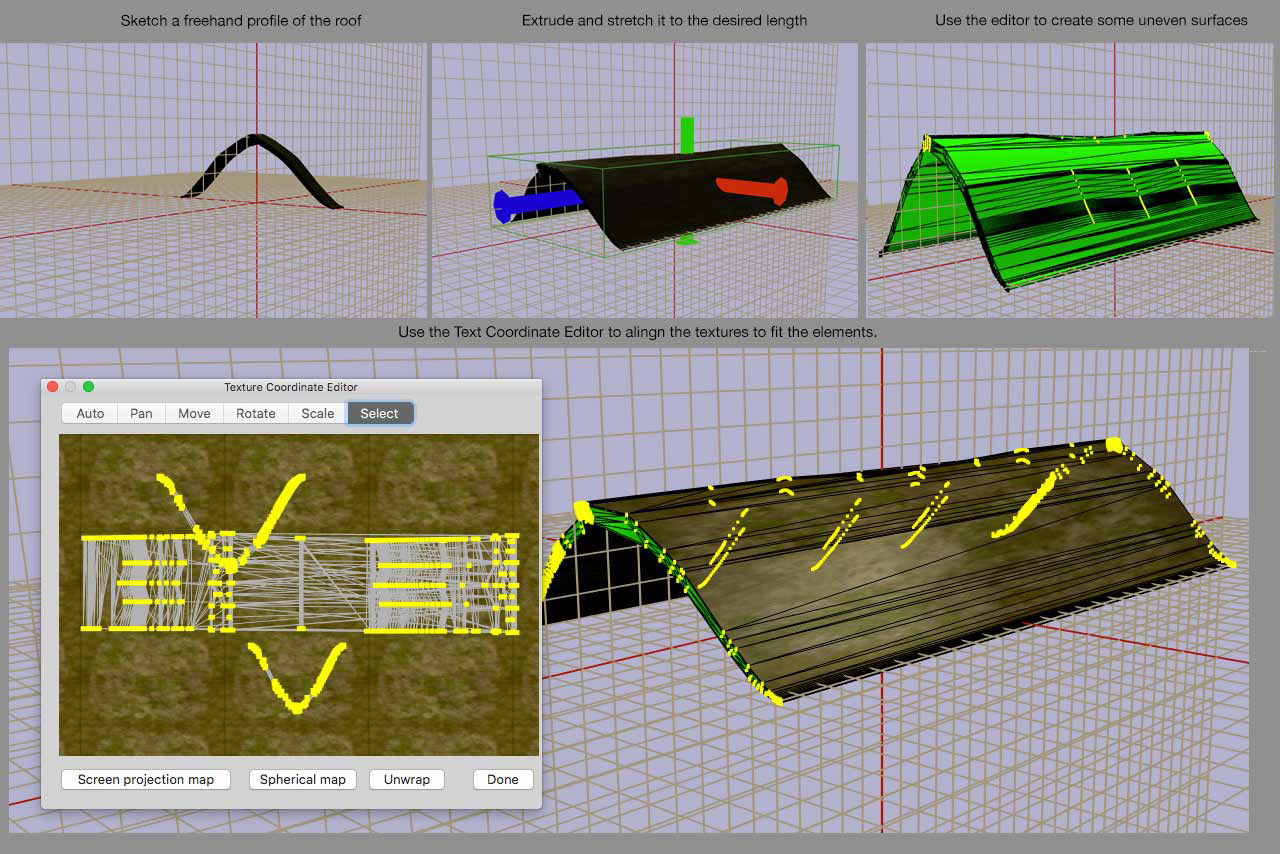
(Verto studio 3D ( https://vertostudio.com) is a free program, just like SH3D, which is very easy to use, and in my opinion is the perfect partner to SH3D for anyone who want to create 3D models or edit existing models.
And the text coordinate editor… I couldn’t make my illustrations without it!)
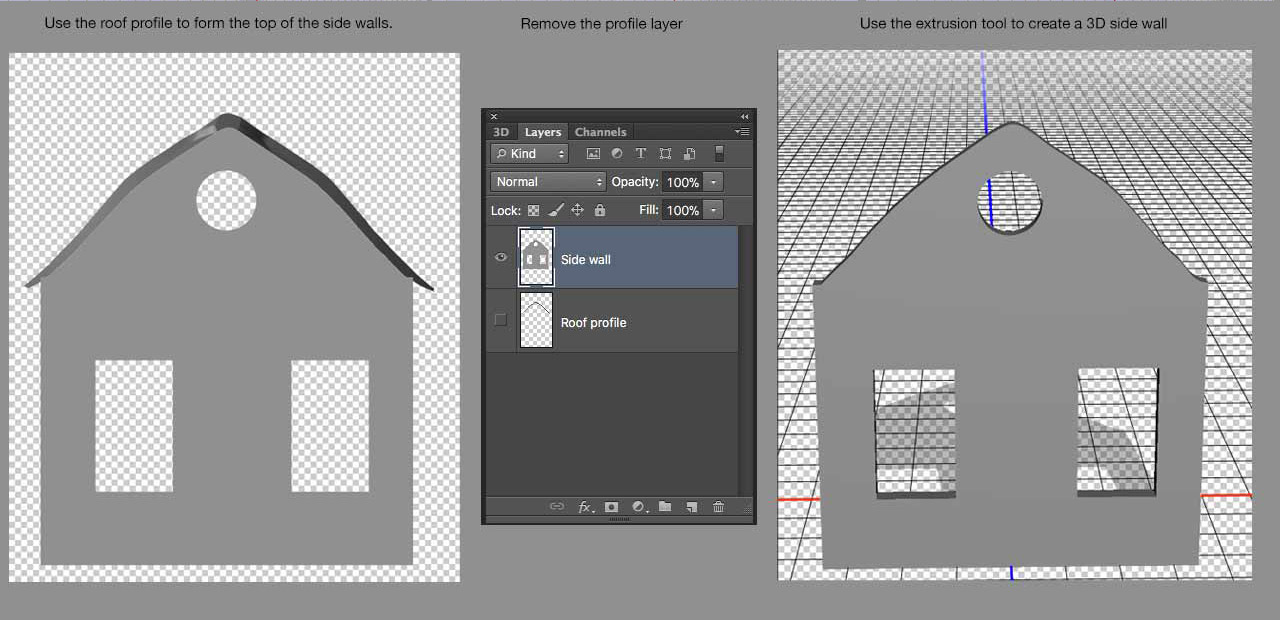
After making the roof, I turn to Photoshop for the end walls. The roof profile is used to get the right shape for the top of the wall.
Cut-outs for windows is done here. There’s no going back, so once it’s done, that’s how it will be:
Then I join the elements in SH3D, and make a group:

If I plan to have a cellar, I will leave room for it by defining my ground level at +300 cm.
This is done to avoid the cut-out problems that occur when you place objects on levels with negative elevation.
For this project I want a cellar, so my ground level is defined at +300 cm.
I end up using ten levels for the whole project:

(I had planned to build my house from 3D elements, and not use the perfectly precise and flawless surfaces produced by SH3D.
But after struggling with creating seamless joints on the outer walls, I created the cellar by drawing the walls with SH3D. )
OK, so the house now looks more or less like I planned it.
I will create a grassy ground for it to sit on, and spread some elements around outside, and add some furniture inside, so it looks like someone is living there.
It’s time for a few test renderings:
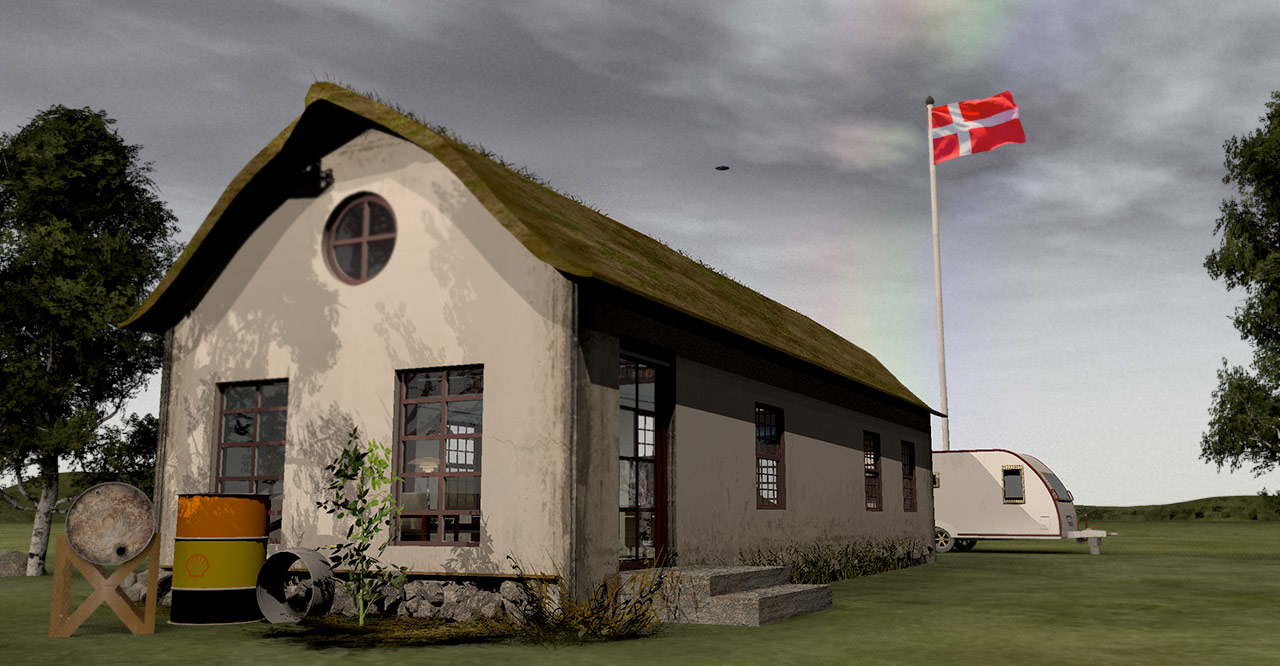
Hm, I need to put some lights at the entrance – and get rid of the flying saucer.
I will place my favourite Landy in front of the house ( a car you absolutely don’t buy if you’re living in Copenhagen!).
Then I can envy the people living here.
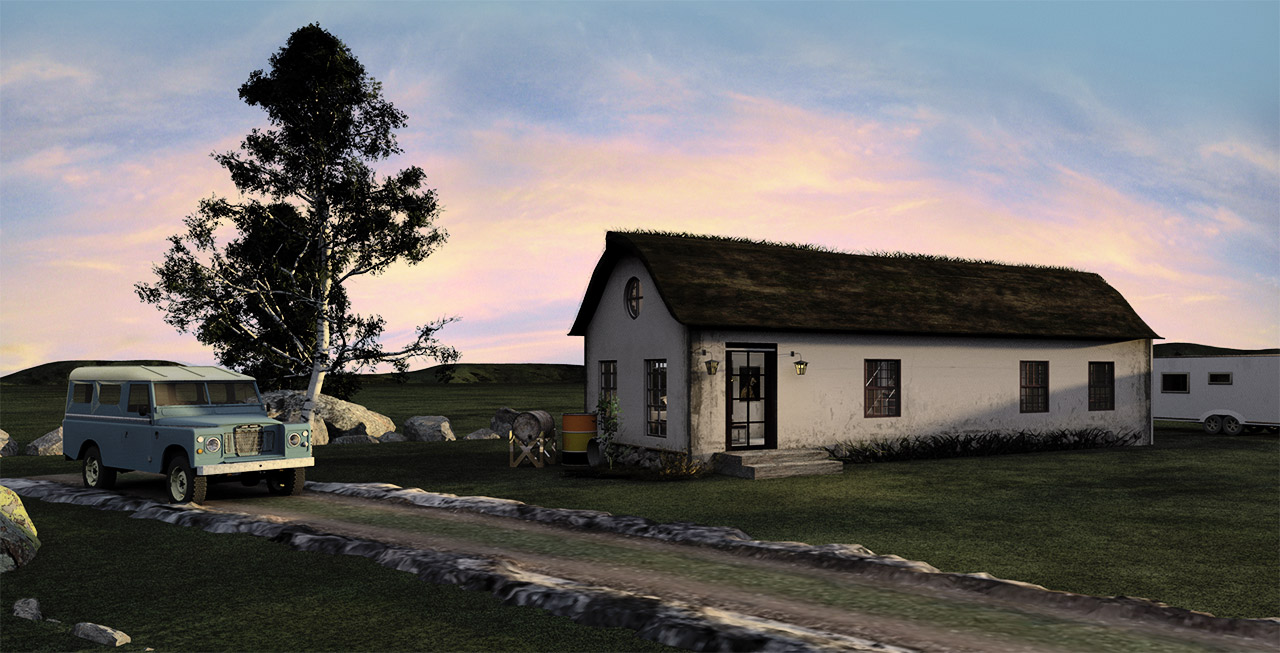
That’s better.
The next step is to create the surroundings.
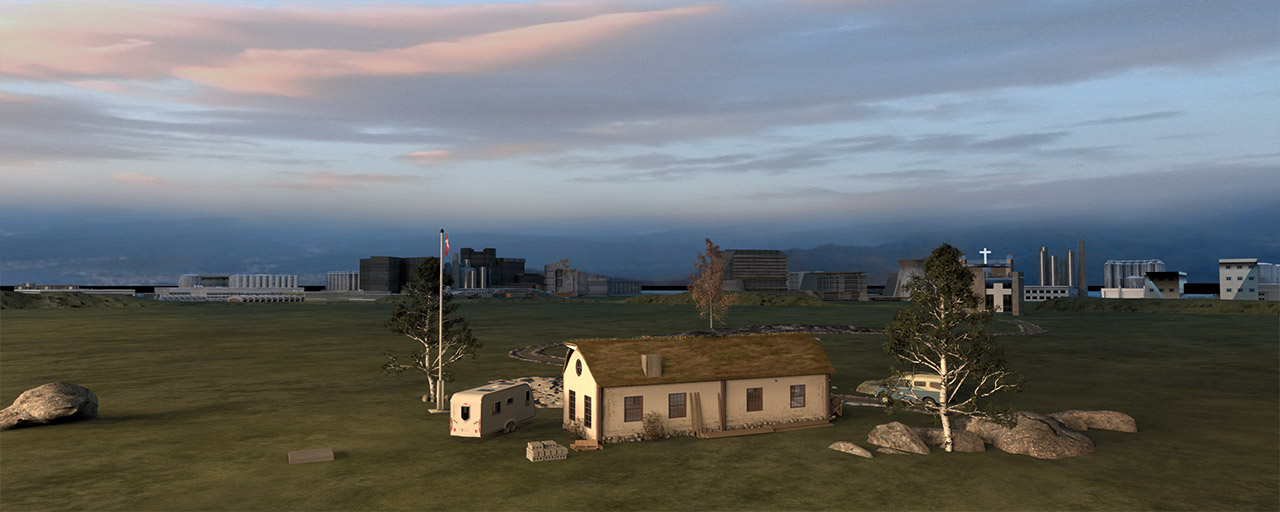
Create a well…
and recognise that the autumn is here.
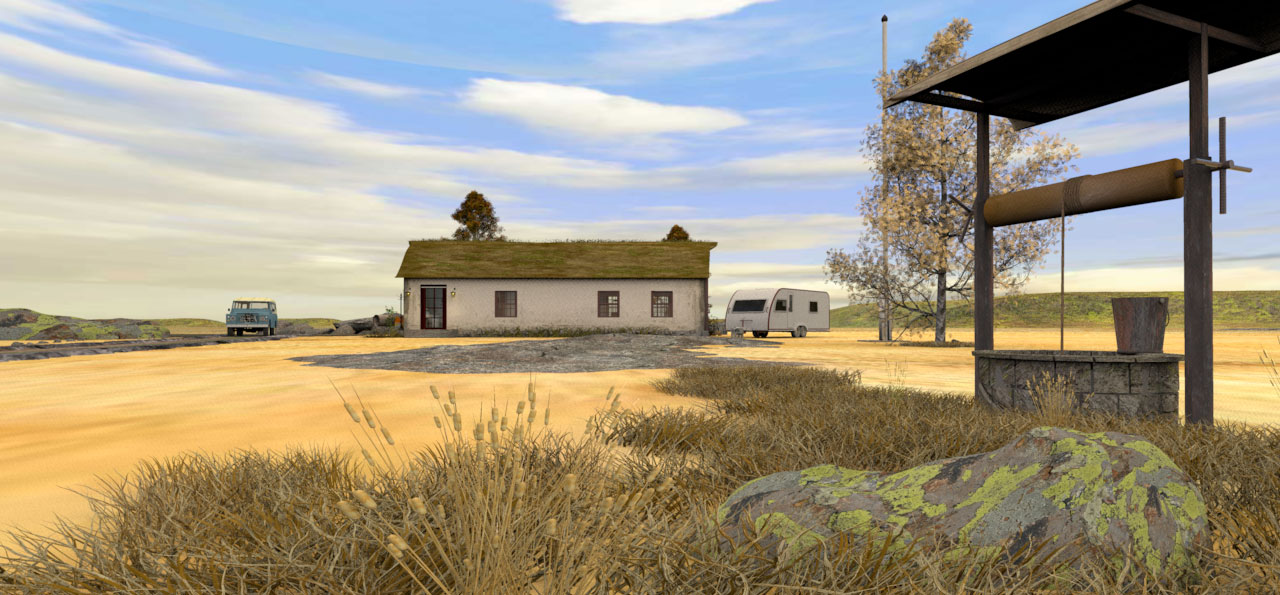

I like it.
Time to go inside:
Entrance:
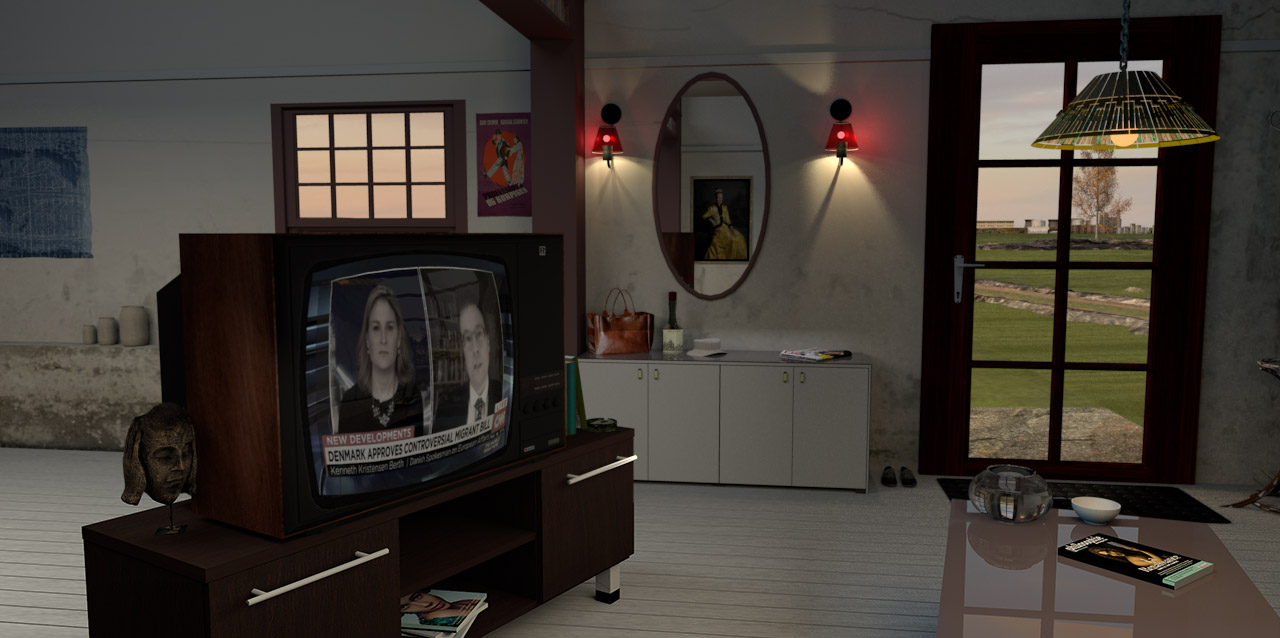
View from the entrance:

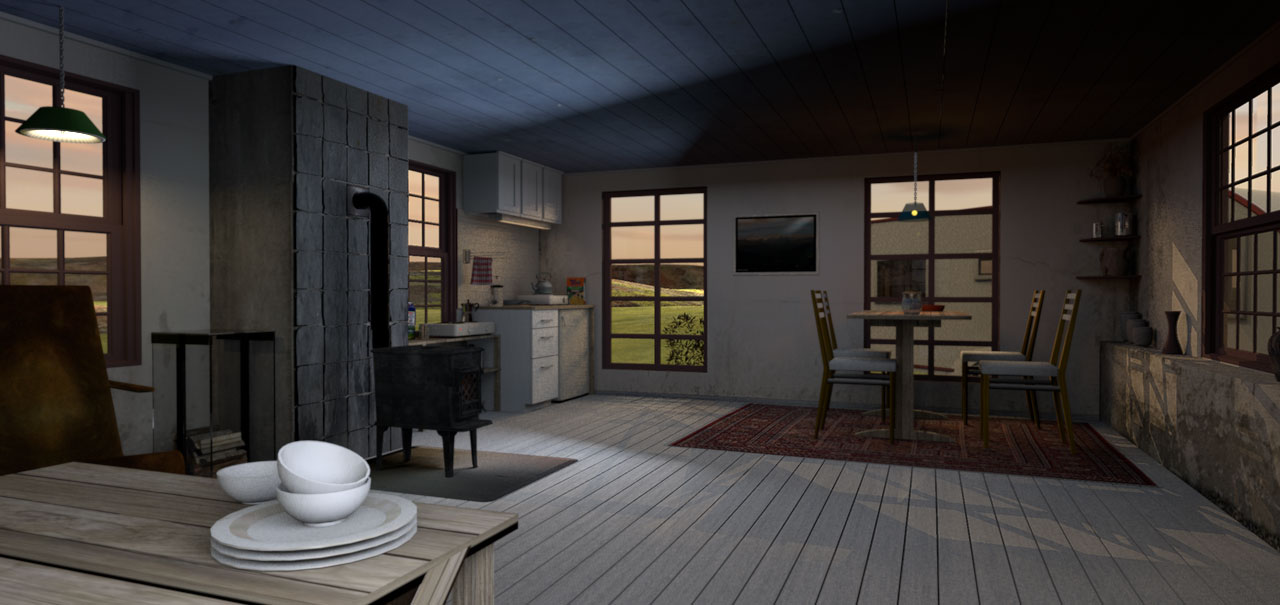
Breakfast, lunch and dinner table.


A sort of kitchen

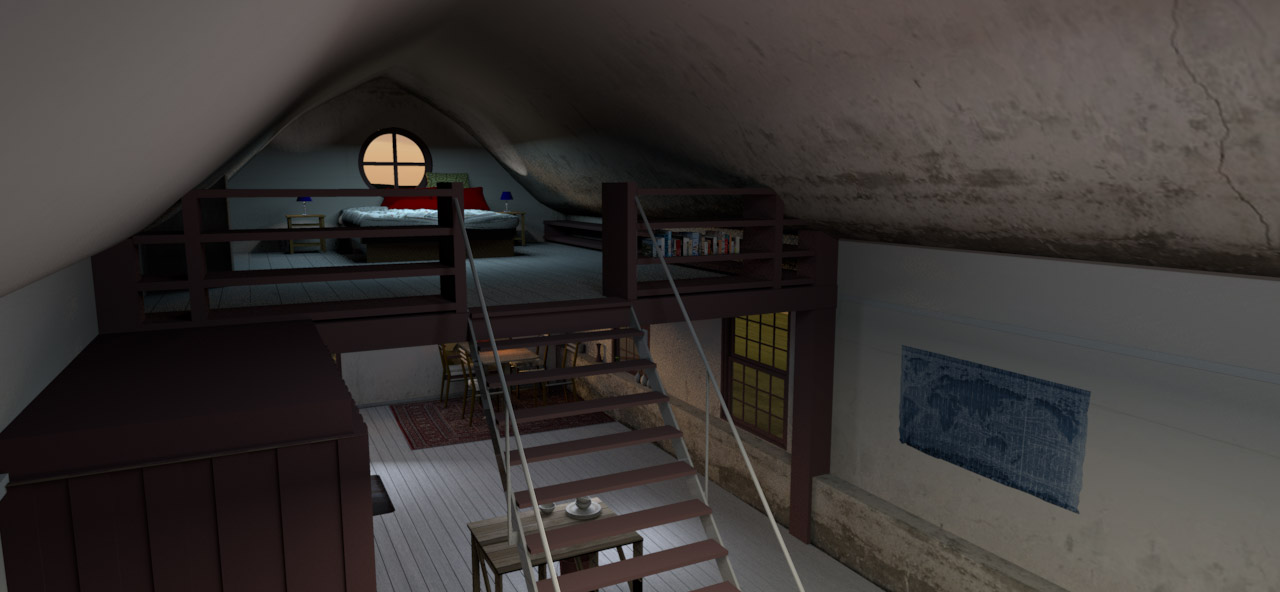
The mezzanine, where the bed is.
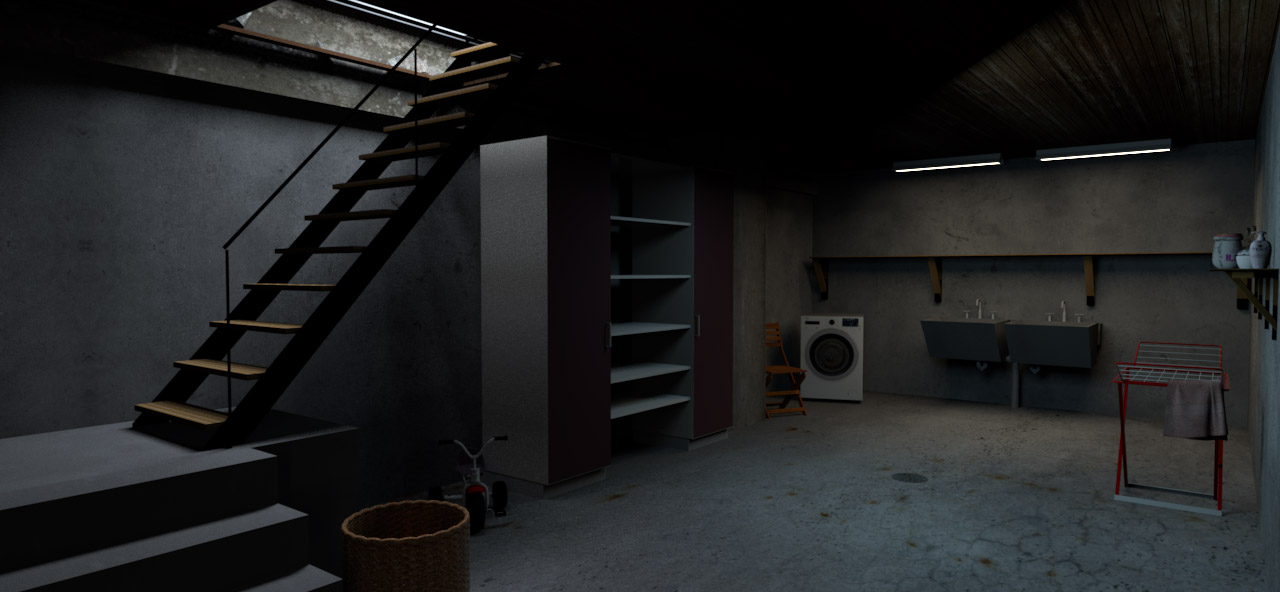
A look at the cellar


Pray more – worry less…
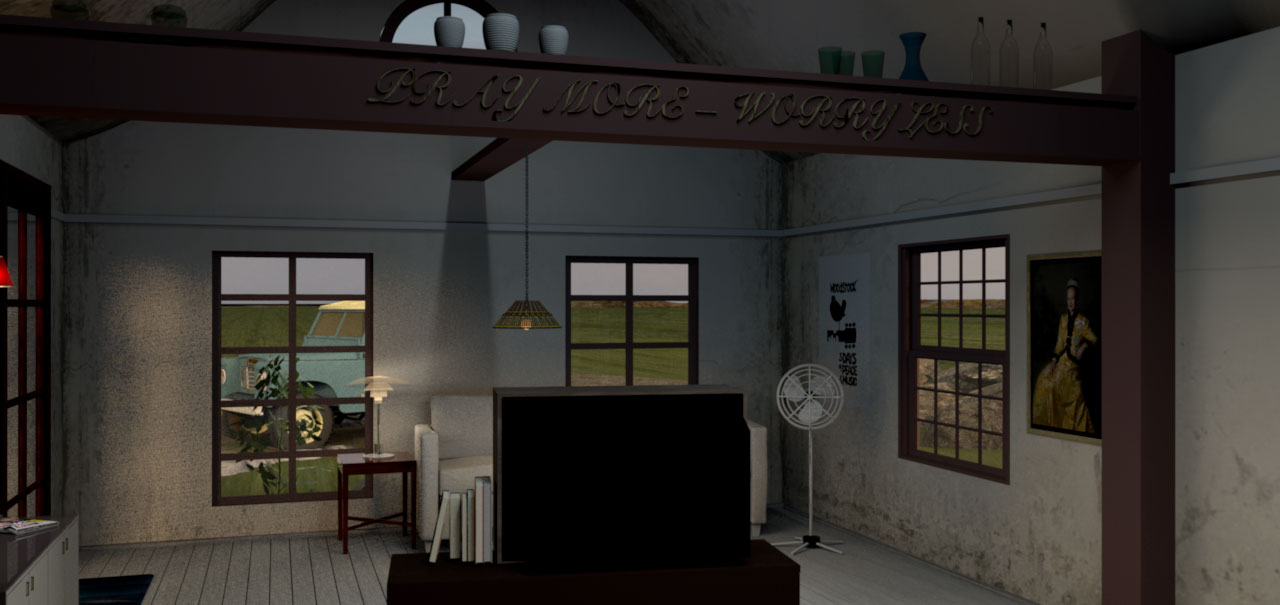
…or just watch TV, as the daylight is fading.

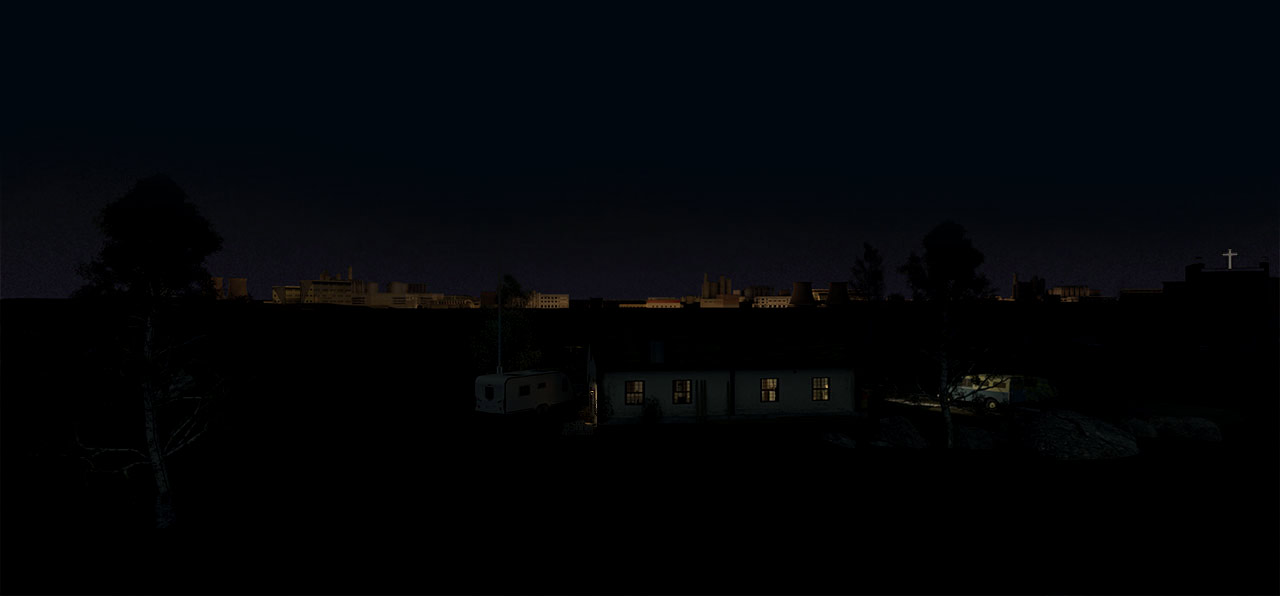
The day is done.
A quick look to see that everything is quiet and safe.

No one has stolen the car.
Yet…
_____________
Next project: A modern summer house.
Cec
