Re: Apartment project with lighting by invisible hemispheres. I continue advertising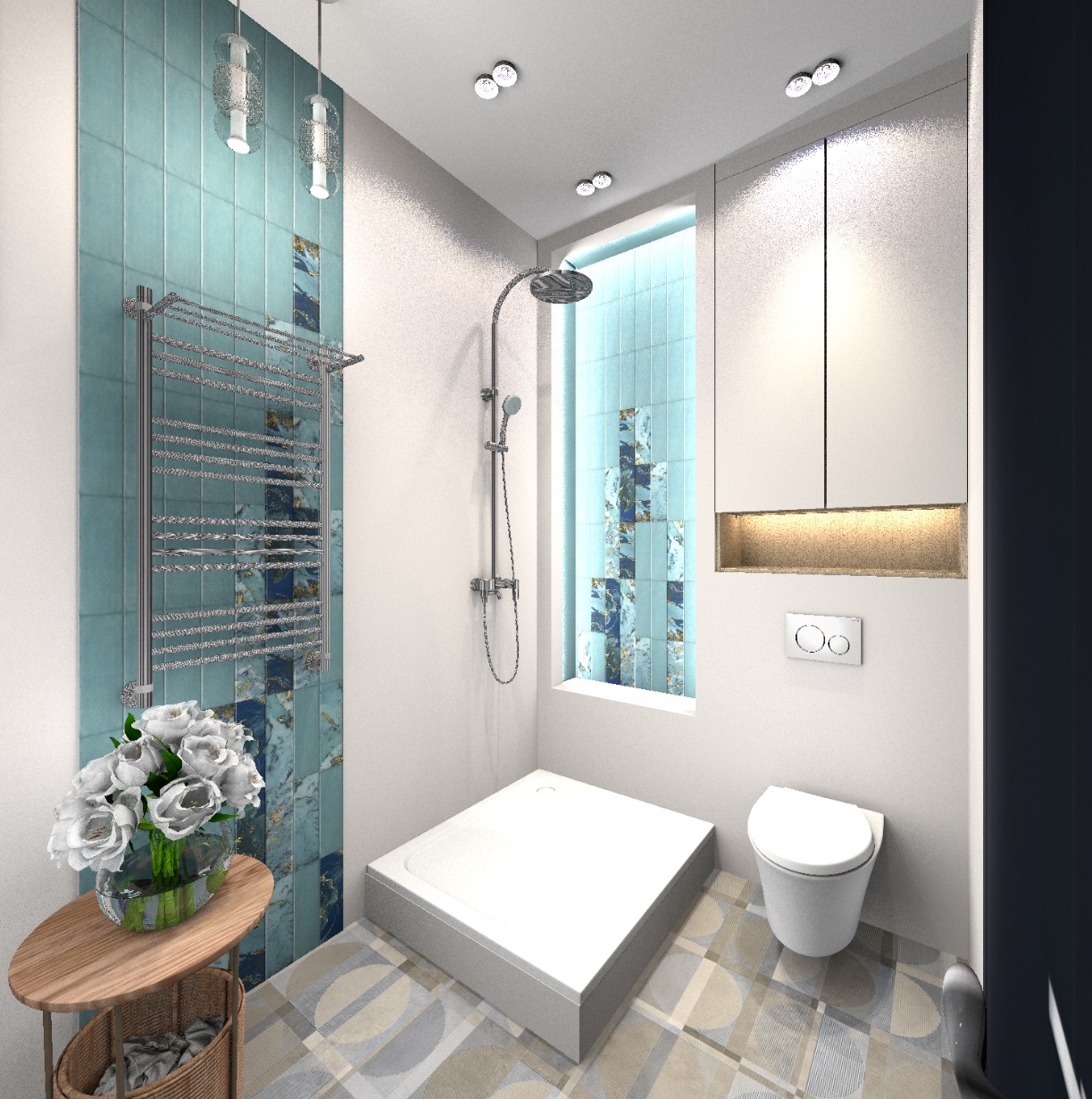
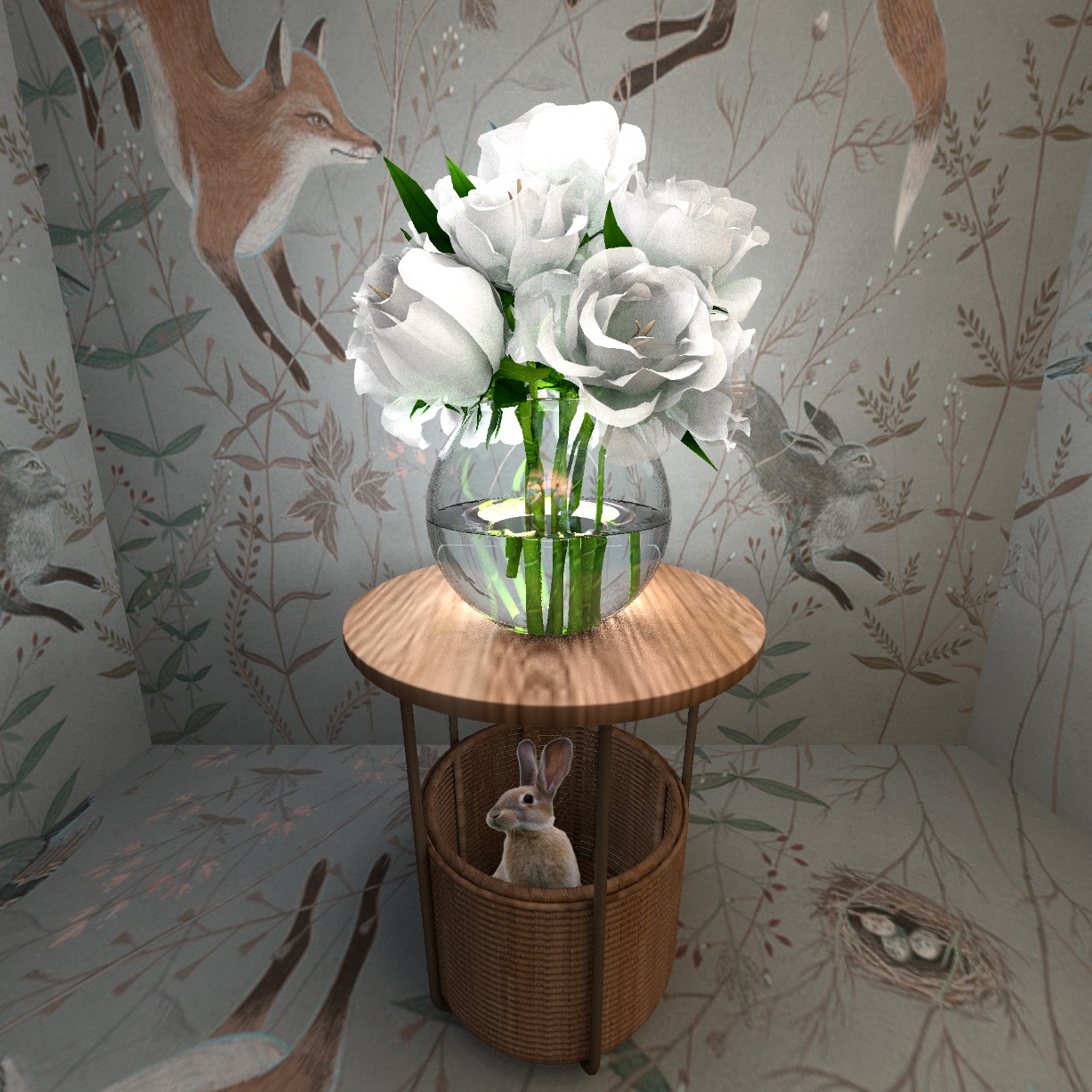
Hi. I was interested in a vase with flowers in the bathroom interior. I downloaded it as a completely opaque model with several groups of textures inside. Petals, stems, stamens-pistils, glass, water. All this had to be changed individually with the help of changes in the MTL file. I spent a lot of time on experiments and did not get what I wanted in full, I really look forward to your advice. First of all, I realized that in order to get the effect of glowing delicate petals, you need to set the transparency coefficient "d" for them to an average value (range of values 0-1). If you leave the "1", then there will be ugly black shadows inside the buds, this does not happen in reality. And it is necessary to achieve a balance between the necessary transparency of the material and the absence of blackness inside the mold. I took the most difficult case, the white petals, for the purity of the experiment. So far, I am satisfied with the value of d 0.6. It turned out like in a watercolor drawing - green leaves are slightly visible, but in general the illuminated surfaces look snow-white. And of course it should be noted that the bouquet is illuminated by a group of two hemispheres facing inward, they form an irregularly shaped sphere and illuminate the buds from all sides evenly. I am happy with the result here. But then the experiments on glass went on. There are 4 parameters that need to be changed for the desired result. "d" should be set to 0.1. Then there is a mysterious coefficient Ks, which is probably responsible for the mirror effect of the material. I studied the mirror model in the SH3D library and saw that it was set to 0.5. Next comes the Ns coefficient, which is also responsible for mirroring, I did not understand which one.. It needs to be put up more, in the end I put up 1000 at all, this is probably the maximum, and I didn't notice much. And I would like to get a translucent MIRROR ball. The reflection becomes clearer when magnified, but there is no mirror effect. I'm waiting for your advice, I'm at a dead end. Then there is the Ni coefficient, it is responsible for the optical density, I set the model in the water group 1.7, the higher the value, the larger the stems under water, here we must not overdo it. I placed a small flashlight upside down on the back of the stems inside the vase. A very good tool, if all the details are made invisible, then it continues to work after death. It shines perfectly in the right direction, the power has been set to 50%. And if Ni changes, then the effect of the flashlight changes greatly. Sometimes it is very bright, sometimes it disappears from sight. I caught his desired effect at Ni 1.7. There is a hare sitting in the basket on a box with the rest of the sides invisible, with a flat sphere illuminated in front. There is an imperceptible reflection of the background with a sunset photo in the glass of the vase, but I could not achieve a strong mirror effect. What needs to be done for this? The mirror in the SH3D library has an Ns coefficient of 96, I tried the same, the effect is weak. Increased it to a maximum of 1000. I'm not happy anyway. What else can be done for mirrored glass?