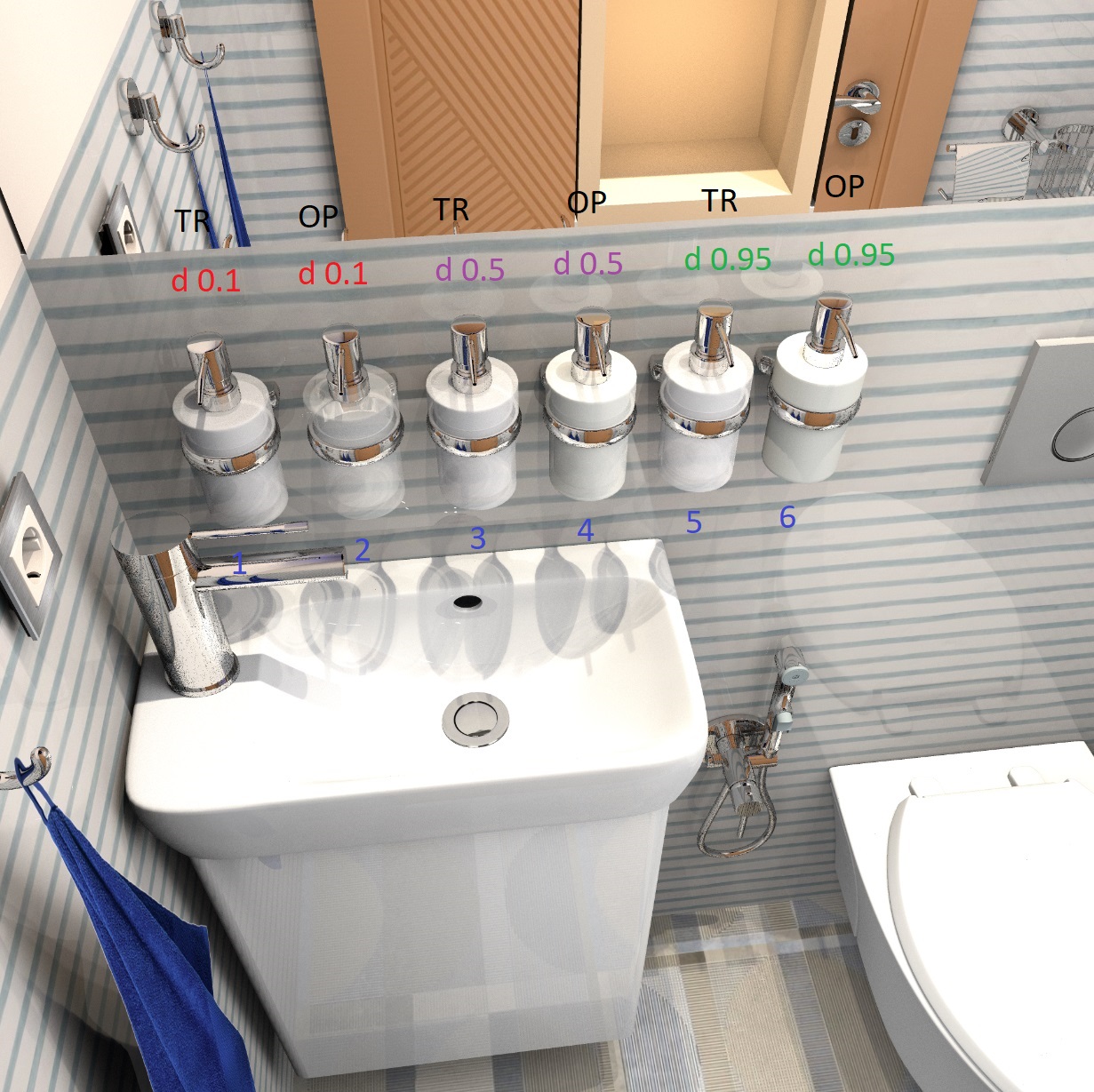
I continue to study the properties of transparent materials. I made a testing ground for the dispenser model. There are two groups in this model, which I changed in the OBJ file and assigned the mirror prefix for the first group (it turned out to be chrome), and for the second group in the MTL file I added the transparency coefficient "d" with different values. I made three options - a dispenser jar with a maximum transparency of 0.1, a jar with an average transparency of 0.5, and an almost opaque jar of 0.95. I set it out in pairs and assigned two different textures - transparent and opaque in each pair of jars. I took transparent textures here, on the advice of dear Keet https://www.transparenttextures.com /.
What did I understand? The fact that transparent textures do not react in any way to the transparency parameters of the material in the MTL file. All the jars turn out to be exactly the same, similar to the parameter 0.5. Therefore, the use of transparent textures still seems to be an uncontrollable process. In the second picture, I added my favorite hemisphere inside each jar-a small tower with a power of 12%, of different colors. The task of this luminous hemisphere is to illuminate the white-painted surface of the jar from the inside. A hemisphere differs from a sphere in that it shines down and sideways. Therefore, the effect of colored smoke in the bottom of the jar is obtained in the jar. The second advantage of such illumination is the effect of a fluorescent soap solution, which removes unnecessary dark edges on the jar. This is how it turns out on real plastic shampoo cans, there are never dark edges, everything glows from the inside. I see the best effect for the average values of the transparency of the material 0.5. The coefficient 0.95 can also be highlighted, but it is necessary to increase the power of the hemisphere, otherwise the light does not penetrate outside. It turns out to be an imitation of white plastic. Transparent white textures (TR) are installed on dispensers 1,3,5. Opaque white textures (OP) are installed on dispensers 2,4,6.
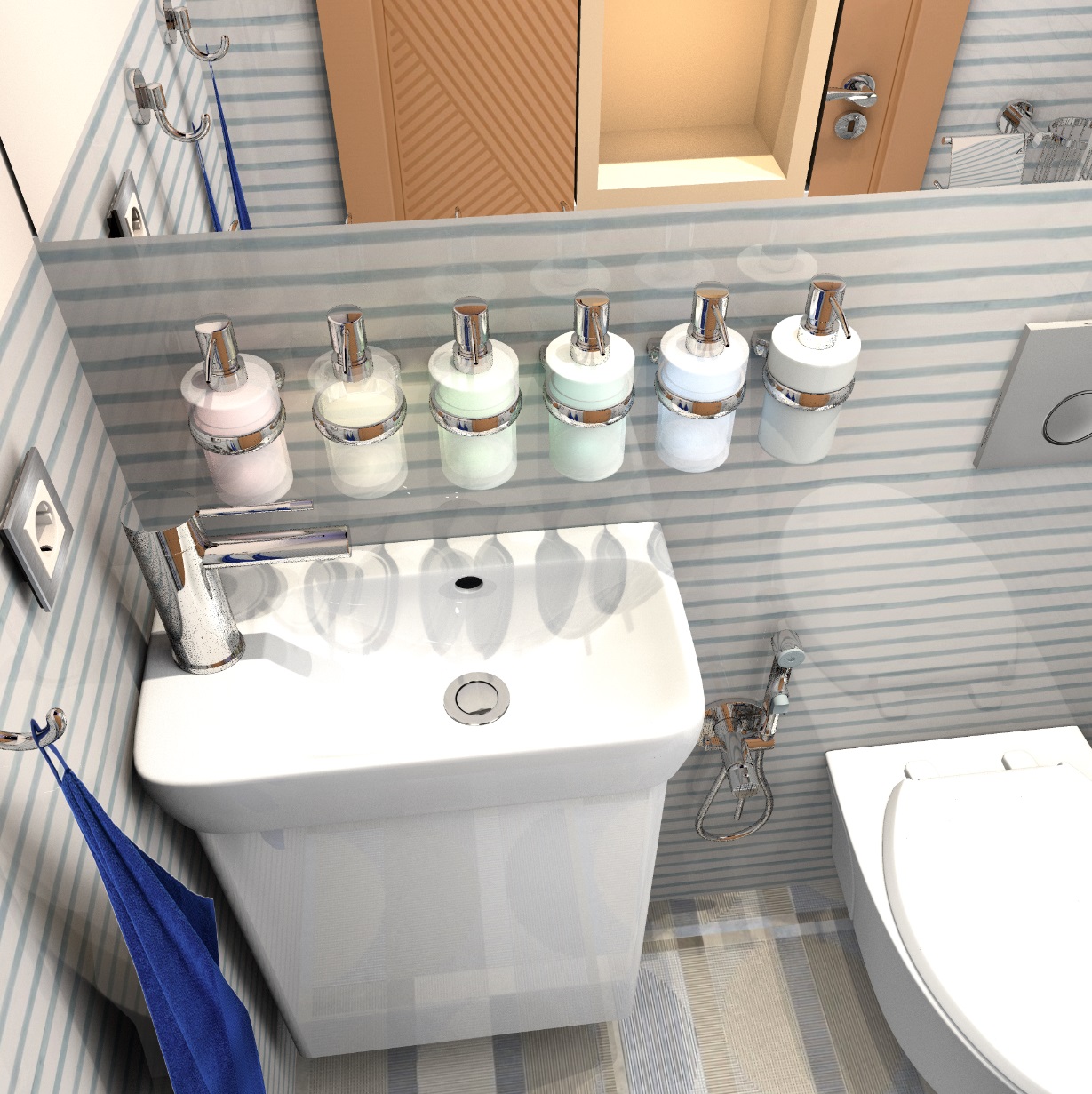
The backlight inside the jar with texture, not color, solves two tasks - it simulates an opaque liquid and removes unwanted dark edges on the shape that are not visible in reality. If you make the backlight very powerful, you get a bright lamp, you don't need to overdo it. If you assign a color to a jar, you get just a transparent glass, so you need to assign the texture of the desired color.
