 an attempt to break into the Royal ball. The Pathtracing parameter
Until now, there is a strong belief among SH3D fans that it is impossible to get moire soft scattered reflections in the program. They are either clear of different brightness (as in glossy varnish), or absolutely mirrored, or completely absent. Most materials in nature have exactly the average properties of light reflection. And on the surface of such objects, reflections do not have clear boundaries, they are blurred, as in matte varnish. This is the third day I've been sitting and trying to tame the Pathtracing parameter. A difficult case.. It is this parameter in the render settings that is responsible for scattering reflected light. This is not a property of the model, it is a property of the entire render, so all items will be processed according to this principle. I started with sunlight and quickly got the desired effect, but I was interested in artificial light, not sunlight. And there the parameter started acting up and refused to work as I needed. I created a room with the help of boxes, placed two pots with a flower, a mirror ball and a vase with daisies inside. Lighting using three hemispherical towers of different colors. And three spots in the ceiling. I painted the walls with a dark gray color and assigned the maximum Ns128 gloss in the MTL file.

to obtain the moire reflection effect, it is the maximum gloss of the material that is needed, if the gloss is less than 128 for Ns, then the effect in the render almost disappears. In the standard settings of the third level, the picture looks like this.// Now let's replace the standard LightingMetod parameter with Pathtracing. In the third level of quality, it begins to act only in conjunction with SILK. In the fourth quality level, it works with both DEFAULT and SILK parameters. It is immediately clear that there will be no easy result. The first images turned out to be disgusting. Very coarse coarse grain everywhere, some broken black and white pixels all over the surface of the picture. Everything is very bad and ugly. I started to explore other options. There are two parameters that help to improve the image. The OtherLens parameter changes the grain size on glossy surfaces. But the rendering time depends very much on it. For example, 0 at the fourth quality level - the rendering time is only 9 minutes!!.
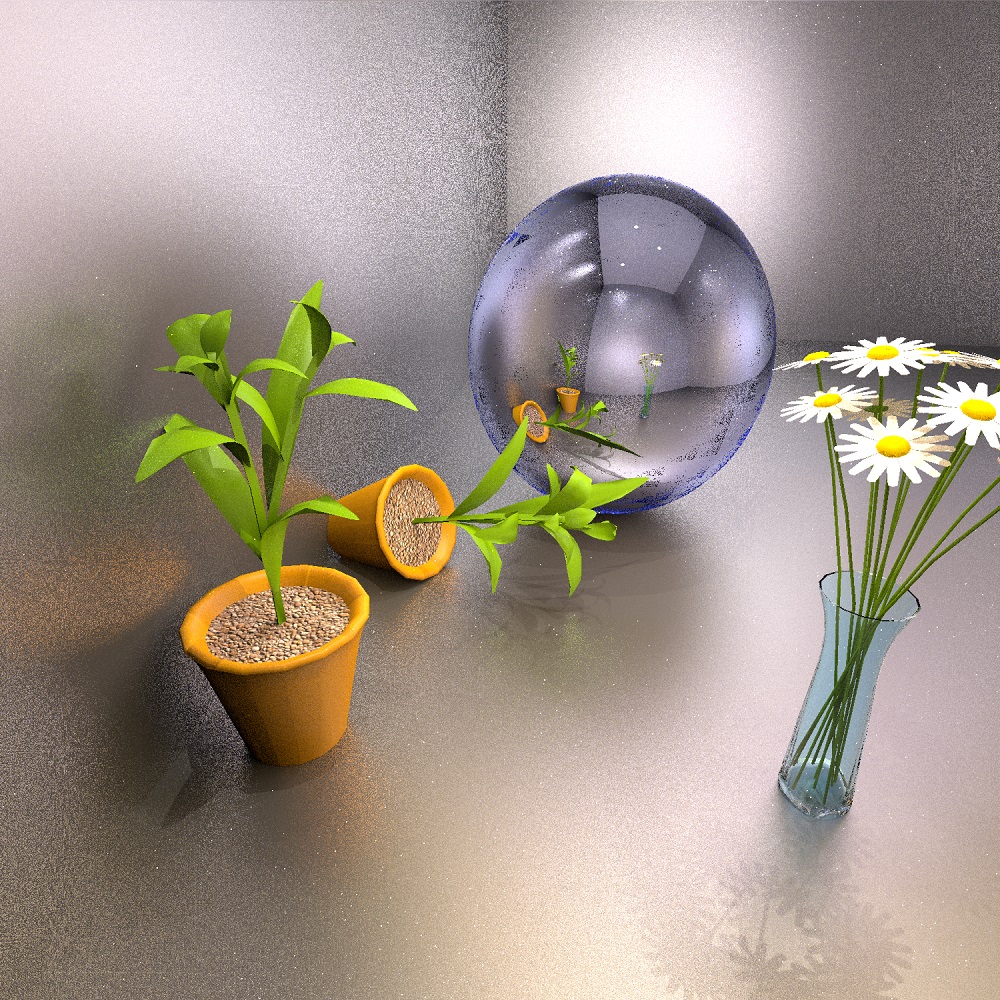
And at 10 it is already 1 hour 35 minutes (the effect is very imperceptible, you need to add more, but time also increases immediately).
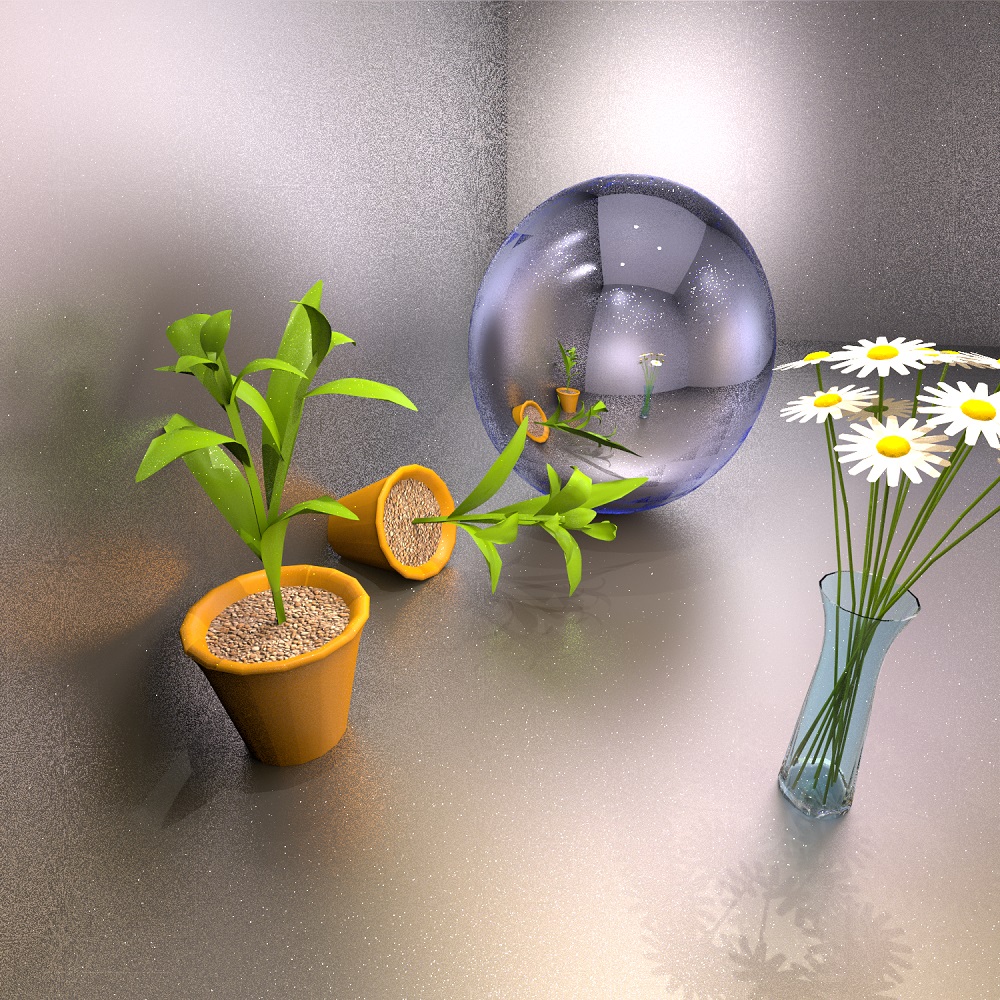
And there is a second very important parameter on the next line in the settings. It needs to be set only to 2, slightly shift the process, no more. If you set it to 3-9, then the whole picture will be covered with sparkling stars. But at 2 it is even more or less tolerable, and these rare white pixels can be slightly removed with an increased resolution (in the following picture 3000x3000 pixels, everything turns out much smoother and more pleasant, without coarse noise and grain, time 3 hours 10 minutes).
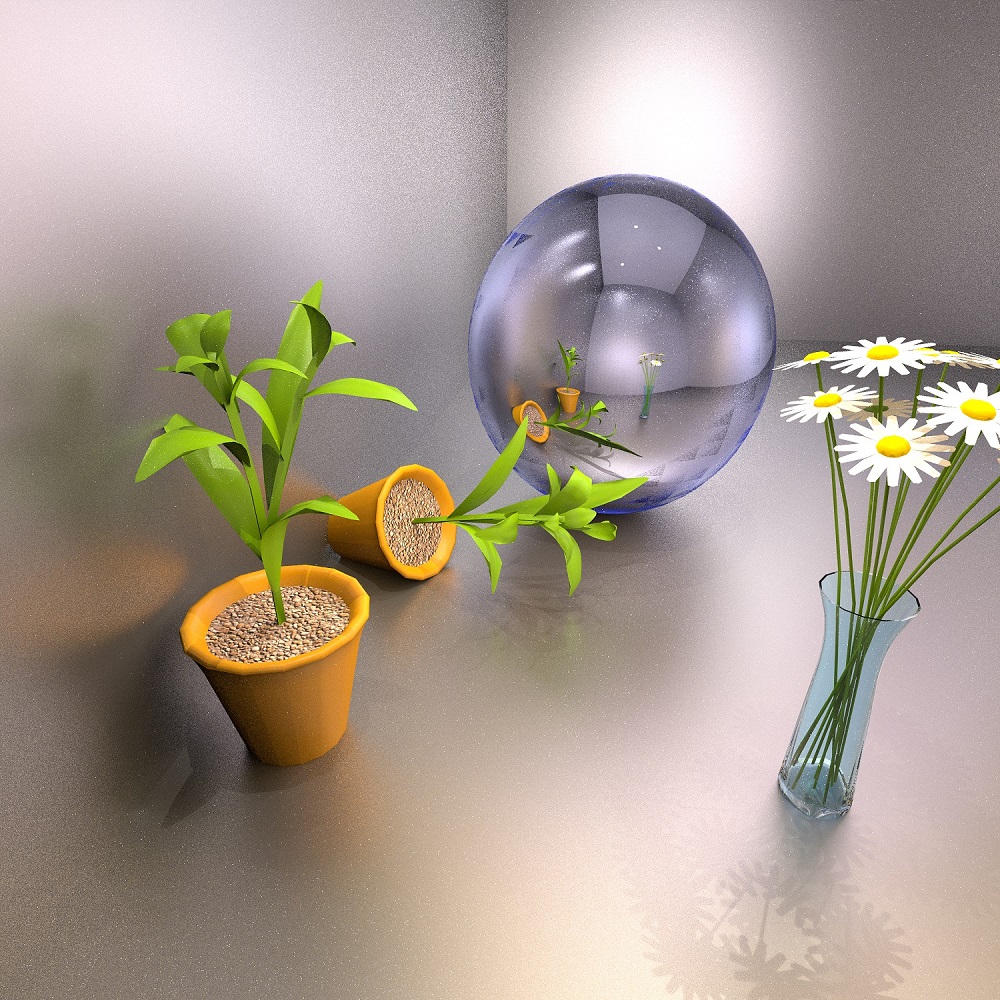
But the most interesting thing is that the fourth level loads much faster than the third!! But at the third level, the smoothest and softest dissolution of reflections is obtained. But there the time grows 3-4 times. But better (I remind you that SILK is needed). 10h30m...
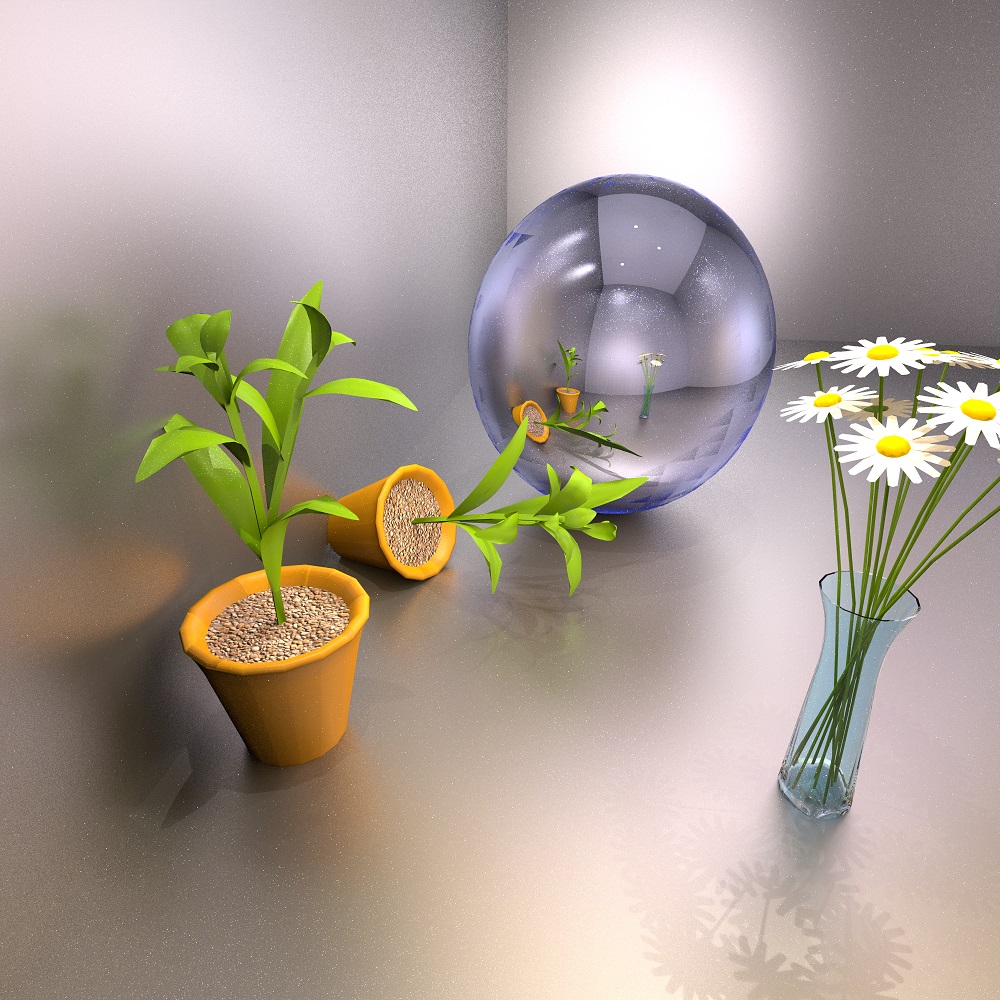
A real royal character, unpredictable and paradoxical, which is very difficult to work with. I tried to apply my discoveries to more complex scenes and was disappointed. For a very long time.. For several days, although the morning viewing of the piece in the center of the picture was very pleasing with a high-quality image. So this royal mode is only suitable for simple scenes in the exterior or more complex ones, but with sunlight, without other light sources. It's a pity, this is the most photorealistic mode, without it it is more difficult to get a very realistic picture. Conclusion. Pathtracing allows you to simulate unpolished metallic metals in the render. When assigning a texture instead of a color, the appearance of reflections changes slightly, they spread out in width. The highest quality reflection with scattering is obtained in sunlight from the side. If you use artificial light and several fixtures, the result strongly depends on the settings and the time can increase very much. Pathtracing settings require constant compromises - quality and time. Sometimes good quality is impossible here without a very long rendering and everything loses its meaning.
