The second important advantage is that there is a generation option with the ability to control camera movement. This is very important because it allows you to do something consciously, at least partially. Rather than hoping for a miracle from a neural network without guarantees. This generation method is called 12V-01-Director. Camera movements can be of several types. To work with interior photography, you can take one view or combine several views. For example, moving to the side, turning your head, lifting the camera up, and other combinations. You can make more complex combinations, but the clip time is always limited to 6 seconds. My first experience stunned me. Artificial intelligence was able to recognize all the individual objects in the photo, distribute them in virtual space and even looked behind your back, sometimes very correctly!! Unbelievable. Here's an example of this render.
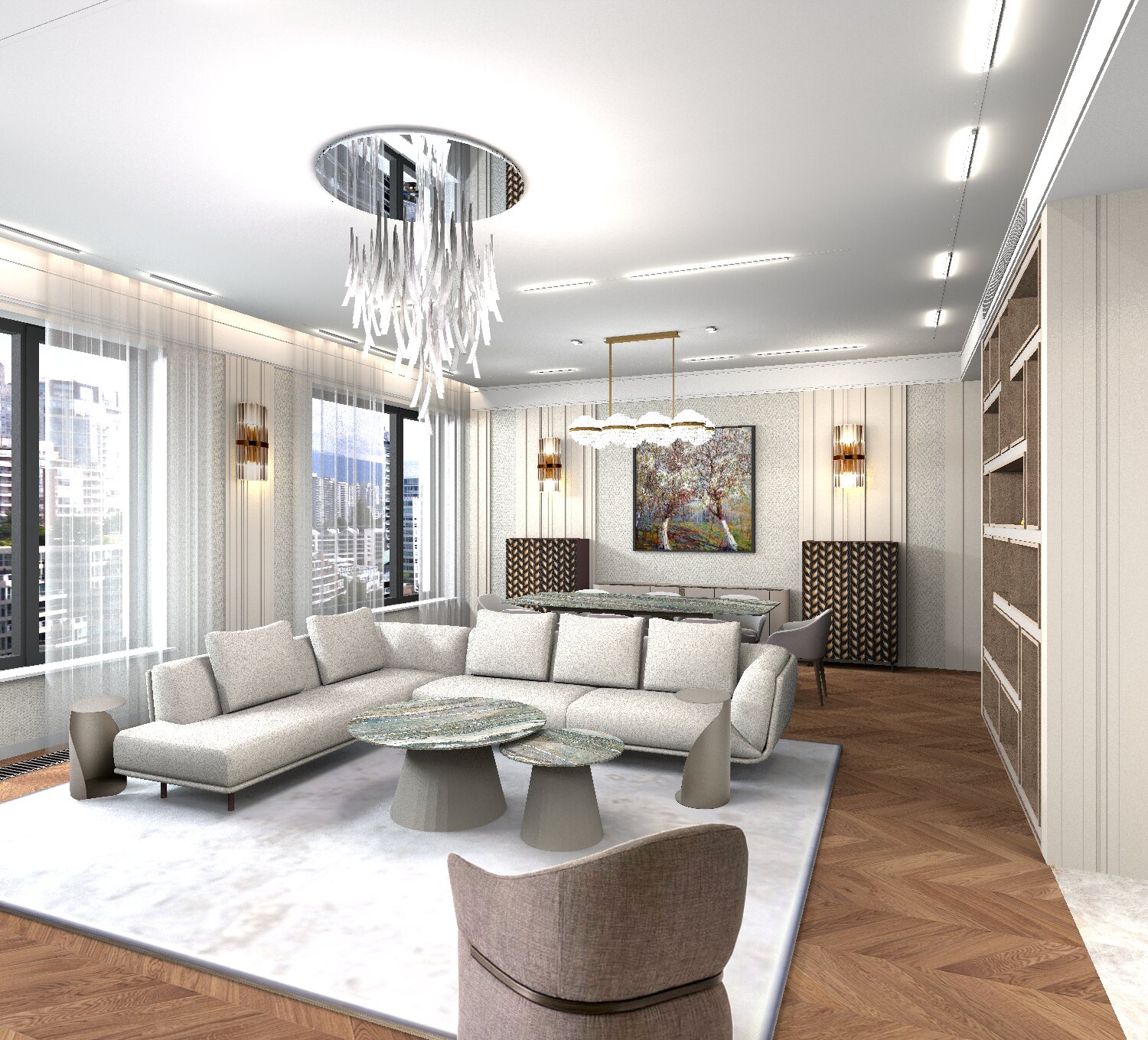
A 6-second clip with a camera consisting of four types of movement (left shift, right turn, upward tilt) looks like this. Pay attention to the chair!! And the mirror on the ceiling!!! There are reflections that are almost right!! And it's originally just a photo, it's not a group of 3D models. Clip 1 is simple
to set up the camera, it is important not to go much beyond the original frame during these 6 seconds, otherwise the intelligence will come up with something unexpected, most likely unnecessary and incorrect. Therefore, I advise you to combine the opposite movements - a shift to the left, then a turn of the head to the right, so that the center of the photo remains in place.
I'll continue in the next post.


 [:">]
[:">]